
Hancock Weekly Arrest Sources
The sheriff's office publishes no weekly blotter, 72-hour booking feed, or weekly arrest page. The official county-linked roster tracks current offenders only. Its booking dates help orient a search. But it is not a public history of every Hancock County arrest from the past week. Someone booked days ago may still appear because custody continues. A person released quickly vanishes from view. The vendor keeps released records internally for 400 days. Yet the public display stays current-only. That retention number is not 400 days of searchable arrest history.
The Hancock County Jail page names the official current-inmate path to check before turning to any secondary arrest source.
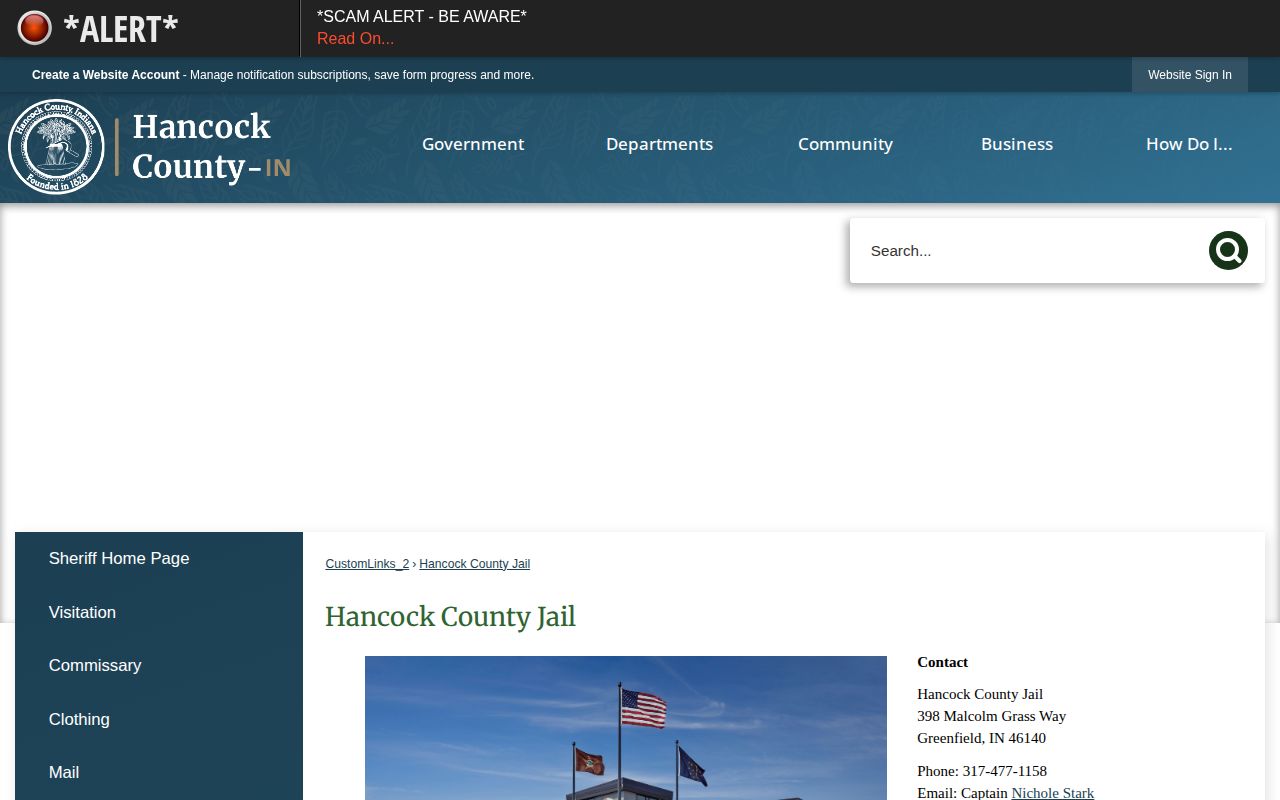
This official capture anchors the broader log to the agency responsible for county custody.
Read Hancock Arrest Entries
Keep the source date and the event date apart. Work backward from the most current roster, then use the court docket or an agency request to preserve the older arrest history.
- Check the county roster for present custody and note the book date.
- Read the charge exactly as booked and record the case number if it appears.
- Search Indiana MyCase for filings, hearings, warrant events, and disposition.
- For a missing prior entry, request the precise record from the sheriff through NextRequest.
- Treat a newspaper digest as dated local reporting, not a live custody record.
- Use a private archive only as a lead, then verify every point with the originating office.
Case details on the roster may carry labels such as pending, sentenced, dismissed, or charge-not-filed. Those details matter. Read the docket dates. Confidential, juvenile, expunged, and other restricted cases may not appear in public arrest records at all.
Hancock Arrest Log Fields
Field names shift from source to source. The roster carries custody and booking data, a news digest may only summarize selected charges, and MyCase holds the later court history. Read the common fields without treating them as interchangeable.
| Entry field | How to read it |
|---|---|
| Book date | Date attached to jail intake, not the date a story was posted. |
| Arresting agency | Agency tied to the event; county custody may still be at Hancock County Jail. |
| Charge | Booking charge that can change after filing review. |
| Case number | Bridge to the public court docket when a public case exists. |
| Bond or court date | Operational or scheduled data that may be revised. |
| Custody status | Status at the source's update time, not proof of status today. |
| Photo | The official roster may display one; no image is reproduced here. |
System timestamps reveal vendor edits. They rarely mark the moment of arrest. Build a weekly timeline around the labeled book date, court event date, report date, and publication date instead.
Daily Reporter Arrest Coverage
The Greenfield Reporter, known locally through its Daily Reporter arrest digest, posts recurring arrest roundups. Each item credits charging information to Hancock County Jail. Charge questions go to the sheriff. That makes the paper a solid secondary layer. It is still not the booking custodian. A digest can run on a schedule, sit behind a subscription, or skip events entirely. Fortville, McCordsville, and New Palestine editions add local stories when they exist. None of them guarantees every booking. Regional outlets pick major cases rather than a routine county log. The Hancock County Prosecutor page can point toward court outcomes and regional reporting.

The official index is useful for outcome context. It is not a complete booking ledger. Note: Date any news item, and check its jail-sourced charge against MyCase before describing what followed the arrest.
Unofficial Hancock Arrest Archives
Private sites fill the gap when the roster no longer lists a released person. RecentlyBooked advertises a 30-day window with several refreshes a day. Arrests.org offers date pages, pagination, and agency filters. Mugshots.zone keeps monthly archives. Busted Newspaper runs its own county section. All of these are private copies, not government records. Official sources come first. A private entry can be stale, duplicated, incomplete, or tied to an old address. When one conflicts with the roster or docket, verify with the jail, sheriff records unit, clerk, or MyCase. The RecentlyBooked Hancock page is one example of an unofficial dated view.
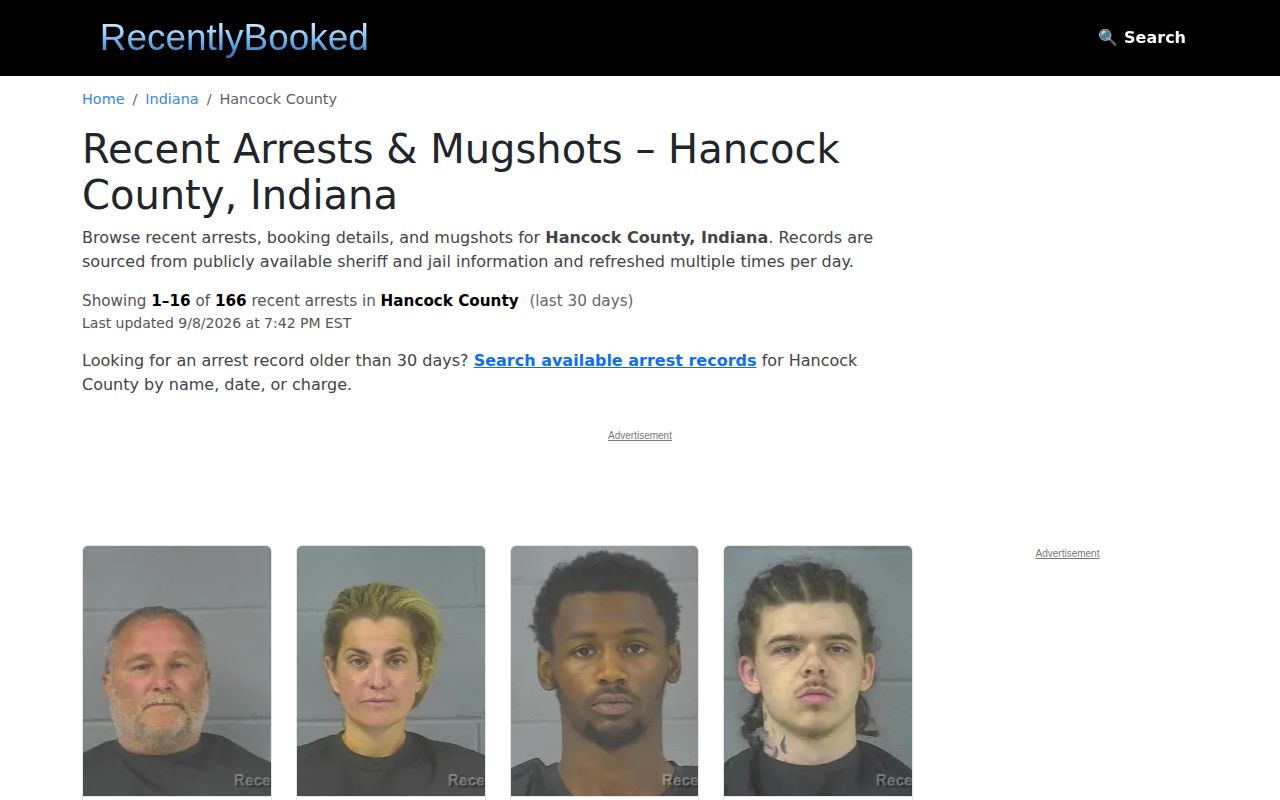
Together these sites map the secondary landscape, not the current status of any single entry.
Hancock Arrest Record Archives
Archives work differently than the live roster. Start with the sheriff's Administration and Records page, which sends electronic requests to NextRequest. Name the person you want. Add the approximate booking date, the agency, and a case or incident number if you have one. Say exactly which item you want copied, because a booking record, an arrest card, a case report, and a booking photograph may sit in separate series.
How long do these files survive? Indiana's Public Safety Agencies retention schedule lists adult inmate custody files for destruction ten years after incarceration ends. For someone arrested under 18, the rule is ten years after release or seven years past the person's 18th birthday, whichever comes later. Police reports and case files follow their own schedules. Keep in mind that retention governs destruction, not access; nothing in the schedule promises the record stays online.
State archives are another matter. Historical IDOC prison materials are not a current Hancock County arrest log. A person transferred to state custody shows up in the Indiana Department of Correction locator. Someone still in the county jail belongs on the live roster instead.
Age changes what a record means. MyCase can show a later court outcome, while an archive copy captures only the original arrest event. The Daily Arrest Report tracks fresh intake, and the weekly log stitches together a dated chain across sources.